
 Business License

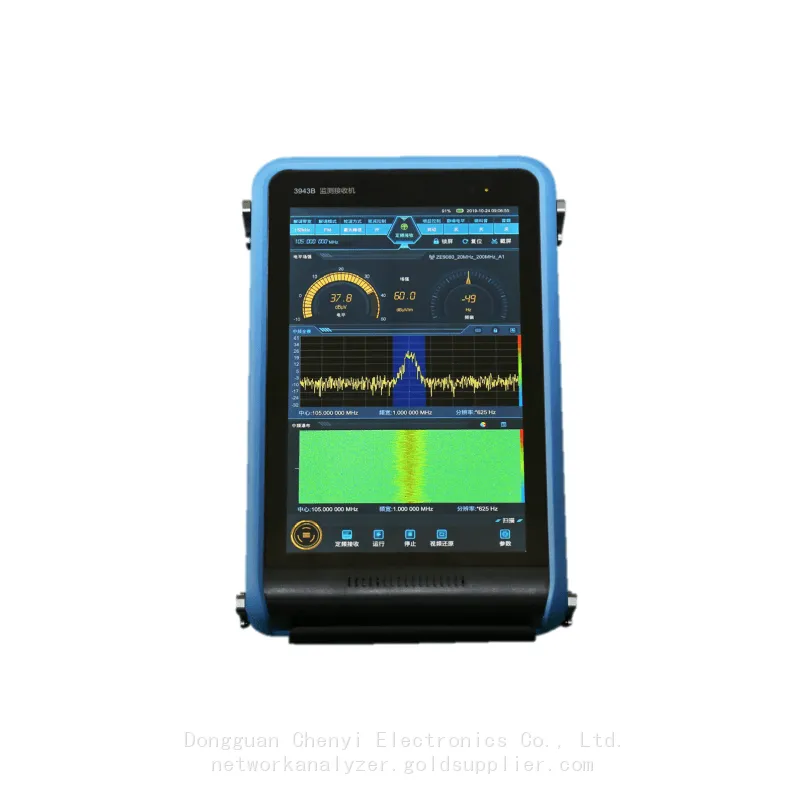
Ceyear 3943B-S Monitoring Receiver Wide frequency range from 9kHz to 8GHz
Ceyear 3943B-S Monitoring Receiver Wide frequency range from 9kHz to 8GHz
Monitoring Receiver 3943B : 9KHZ to 8GHZ
Monitoring Receiver 3943B-S: 9KHZ to 8GHZ
Main Feature
▶Excellent reception performance
▶Multi-channel parallel operation
▶Multi-mode scanning with ITU compliance
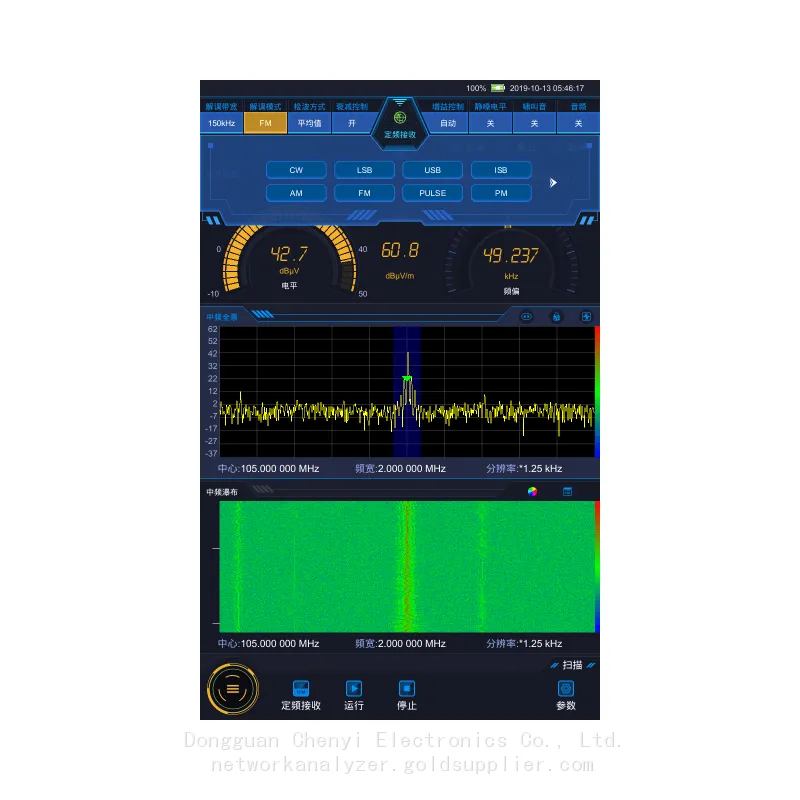
▶Signal demodulation supporting multiple modulation patterns
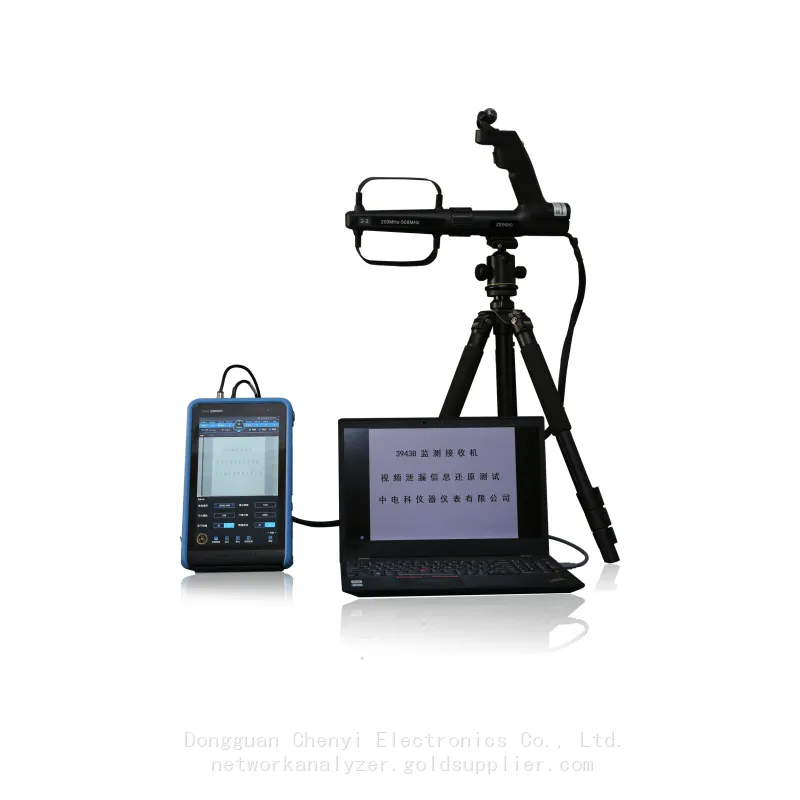
▶Computer video leak detection and restoration
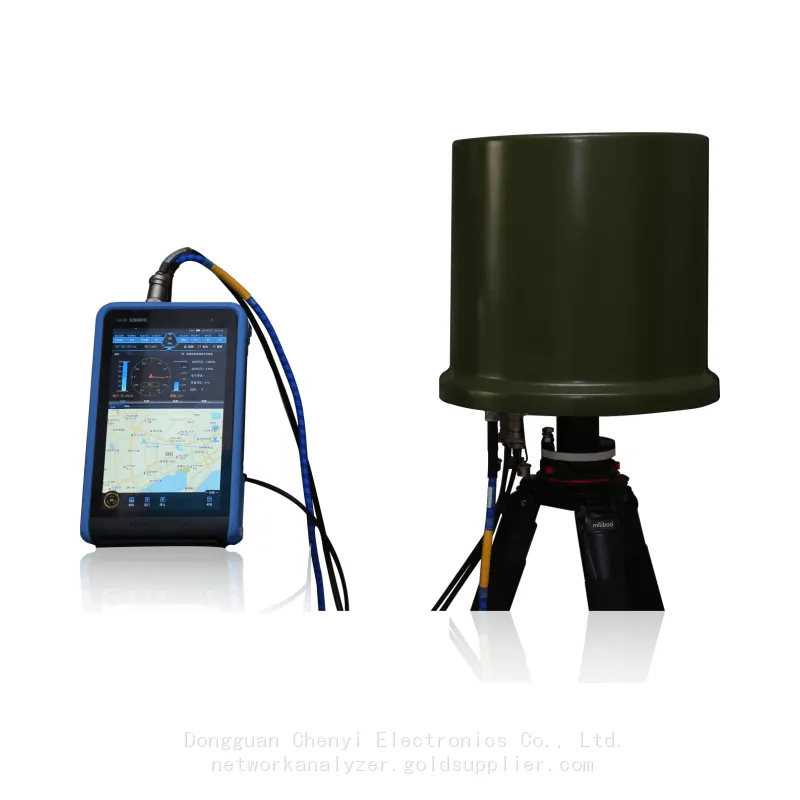
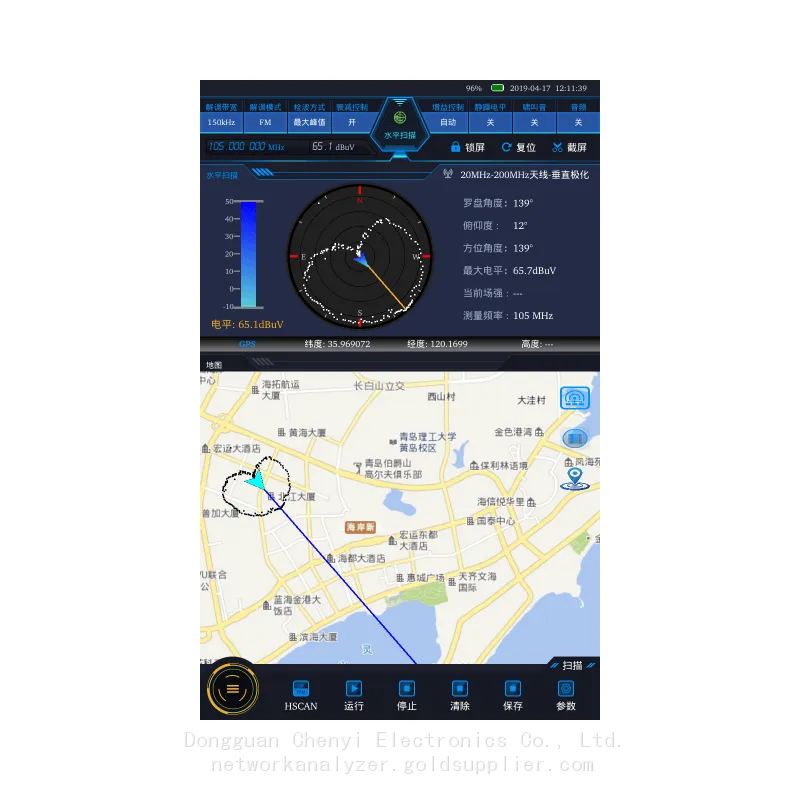
▶Manual radiation source direction finding by directional antenna
▶Automatic radiation source direction finding through multi-element directional antenna
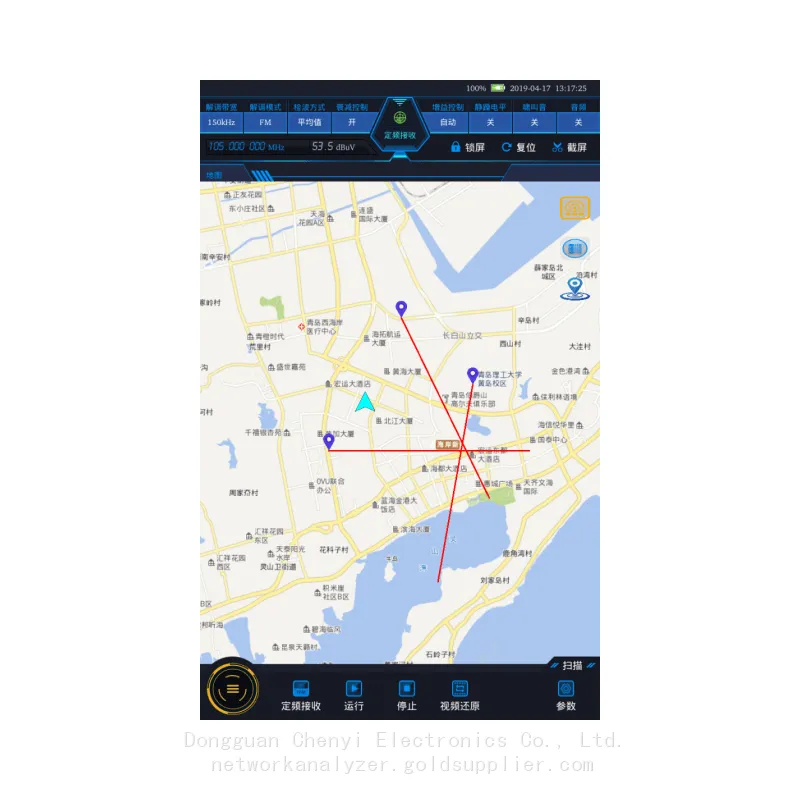
▶Radiation source positioning function
▶Radio signal recording function
▶Audio and spectrum data playback
▶Remote control
Product Overview
The overall size of the handheld monitoring receiver is 182.5mm×289mm×69mm, the weight of the whole machine is less than 3.5kg, the working time is 3-4h with battery, the display is 10.1-inch TFT, and the integrated touch screen. With multiple functions such as radio signal search, interception, measurement, analysis, demodulation, direction finding, positioning, etc., it can be used to perform emission monitoring, coverage measurement, illegal emission source/interference source rapid detection and positioning, and major activities that comply with ITU specifications Radio security and other tasks. The whole machine adopts a full touch screen design, and the software supports multi-touch interactive mode. The touch operation experience of the smart phone is completely transplanted to the monitoring receiver device. The users can conveniently complete the display trajectory zoom in, zoom out, window movement, parameter setting and other operations through touch gestures, providing a user-friendly UI interface to the greatest extent, so that the user can operate the monitoring receiver just like using a mobile phone or a pad computer.
Features
Excellent Reception Performance
Wide monitoring frequency range (9kHz~8GHz) and direction finding frequency range (20MHz~6GHz) to meet current and future radio service signal reception
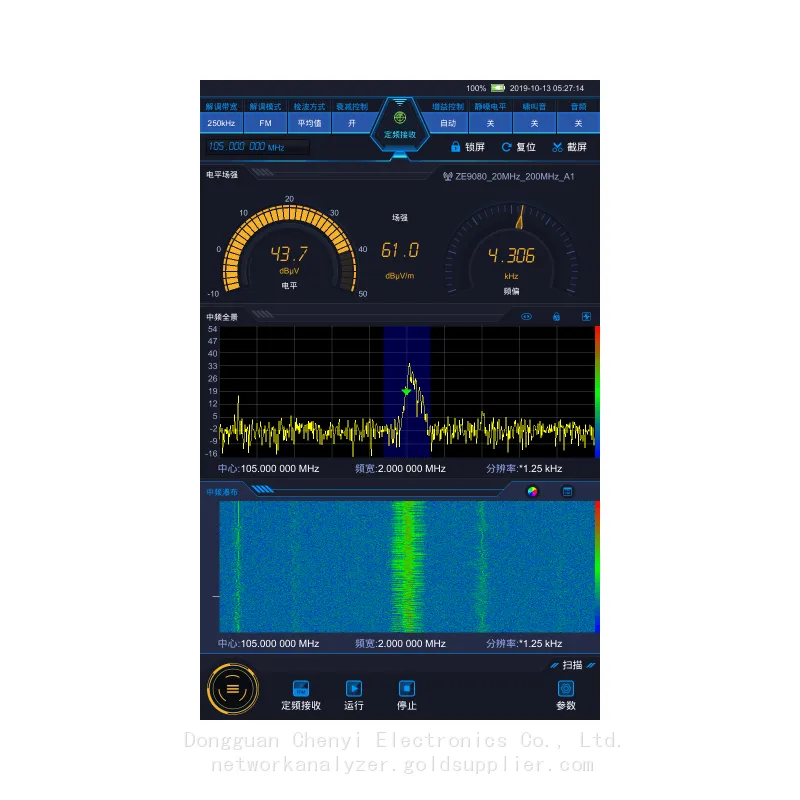
Provide a maximum 20MHz analysis bandwidth, even a wide spectrum of short pulses or bursts can be detected and analyzed
The full-band pre-selection design conforms to the radio frequency characteristics, that is, avoiding equipment overload, high-sensitivity receiving signal, supplemented by higher signal resolution, and superior reception performance.
Multi-channel Parallel Operation
Three parallel processing channels provide spectrum measurement, level field strength measurement and demodulation functions respectively, which is convenient for users to obtain multi-domain correlation analysis results of signals.
The spectrum measurement channel's real-time spectrum bandwidth can be set from 1 kHz to 20MHz, with 35 steps from 0.625Hz to 2MHz resolution bandwidth. The spectrum can be selected to perform averaging, sampling, maximum hold or minimum hold before output through the screen or LAN interfaces.
The level field strength measurement channel has 34 IF filters, the IF bandwidth is from 100Hz to 20MHz, and can be selected independently of the spectrum bandwidth, which is convenient for users to process different signals with optimal signal ratio; level/field strength through screen or LAN interface Optional sampling, peak, power or average detection before output
Demodulation channel receive level field strength measurement channel the complex baseband signal output of the IF filter can be directly used for FM/PM demodulation. The complex baseband signal adjusted by AGC/MGC can be directly output through the LAN interface or used for AM/LSB/USB/ISB/CW/PULSE demodulation and demodulation result data can be output through LAN interface; digital audio demodulation data can be output by LAN interface or converted into analog signal for speaker playback.
Typical Application
3943B can be applied to the radio regulatory department, using the various scanning methods of the receiver to conveniently carry out the daily supervision business recommended by ITU.
The 3943B panoramic scanning function can quickly detect the interference caused by illegal radio stations, interference sources, sudden transmission, etc., and quickly locate the interference source through horizontal scanning or DF direction finding function.
The actual coverage of the radio service is an important part before the service is launched. The 3943B can be used to easily implement the actual road test of the service signal and quickly complete the service coverage.
Recently Posted
-
Software-Defined Instruments: How USB Spectrum Analyzers Are Changing the RF Testing Industry
August 17, 20261. The Benchtop Instrument That Would Not Fit in a Carry-OnAn RF field engineer arrived at a remote cell site in a mountainous reg Read More
 -
Spectrum Monitoring Solutions for Broadcast Radio and Television Transmission Stations
August 17, 20261. When a 50 kW FM Transmitter Goes SilentA regional FM broadcaster serving roughly 2 million listeners lost its main transmitter Read More
 -
Understanding Spectrum Analyzer Key Specifications: DANL, Phase Noise, TOI, and RBW
August 14, 20261. The Specification That Cost Two Weeks of DebuggingAn RF design team spent two weeks trying to measure the third harmonic of a 2 Read More
 -
Real-Time Spectrum Analyzer vs Traditional Swept Spectrum Analyzer: Which One Fits Modern RF Testing
August 13, 20261. The Purchase Decision That Engineers Keep Getting WrongA test equipment manager at a contract manufacturer ordered three tradit Read More

Contact Us
Recommended Products
-
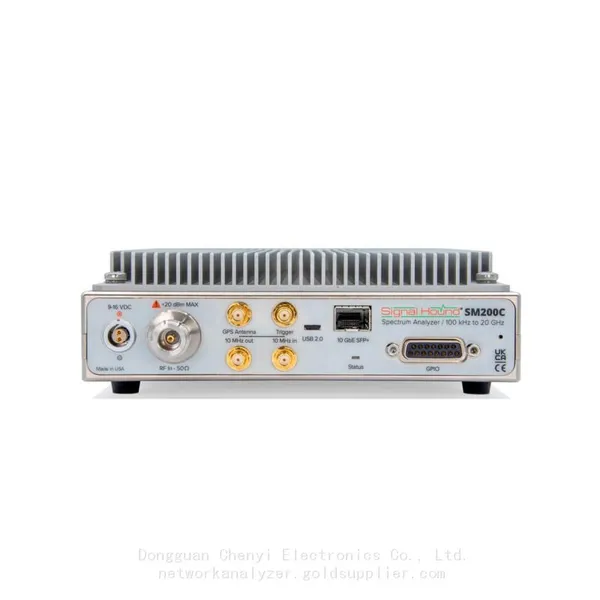
 Signal Hound SM200C 100 KHz to 20 GHz Real-time Spectrum Analyzer With 10GbE Monitoring ReceiversNegotiableMOQ: 1 Unit
 -
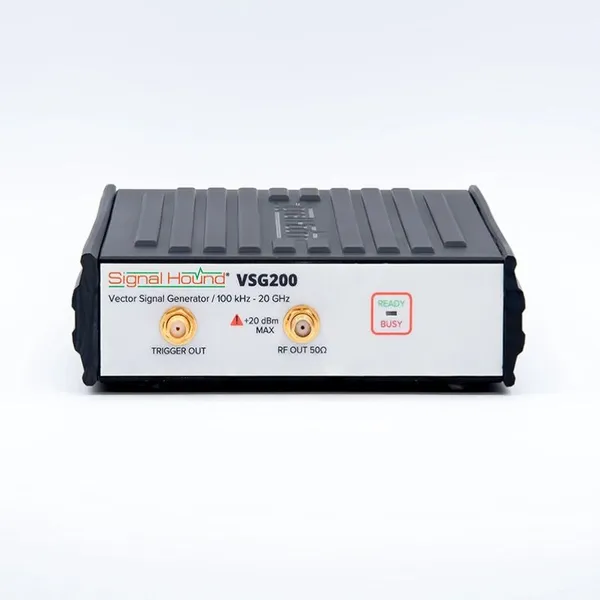
Signal Hound VSG200 Vector Signal Generator 100 KHz to 20 GHzNegotiableMOQ: 1 Unit
-
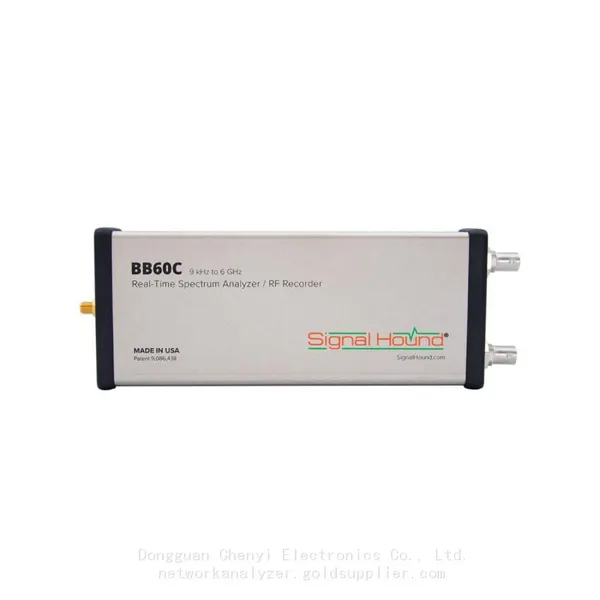
Signal Hound BB60C 9 KHz to 6 GHz Real-time Spectrum AnalyzerNegotiableMOQ: 1 Unit
-
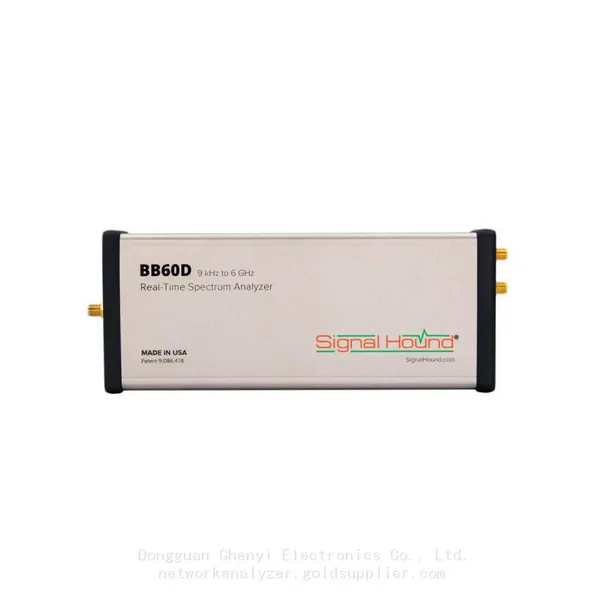
Signal Hound BB60D 9 KHz to 6 GHz Real-time Spectrum AnalyzerNegotiableMOQ: 1 Unit
-
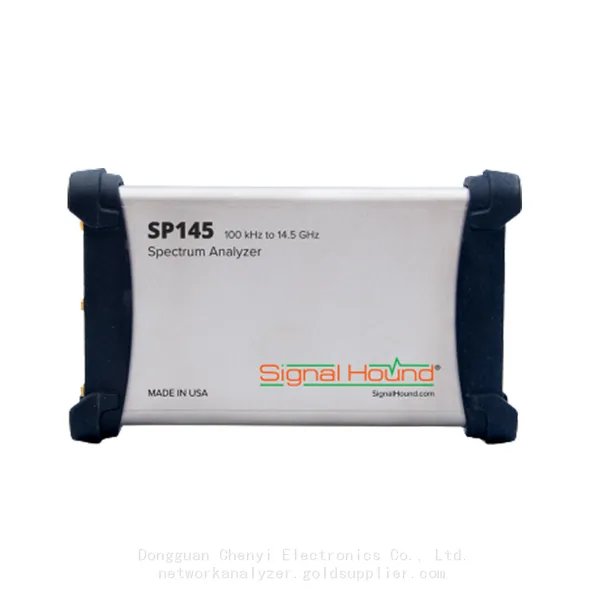
Signal Hound SP145 100 KHz to 14.5 GHz Real-time Spectrum Analyzer Monitoring ReceiversNegotiableMOQ: 1 Unit
-
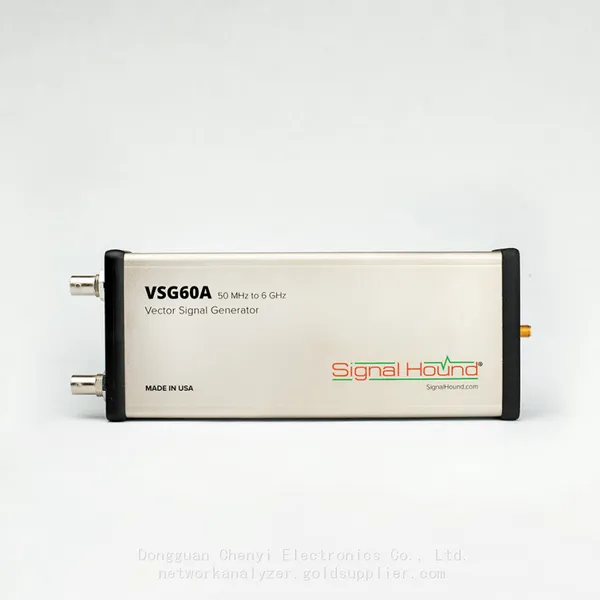
Signal Hound VSG60A 50 MHz to 6 GHz GHz Vector Signal GeneratorNegotiableMOQ: 1 Unit
-
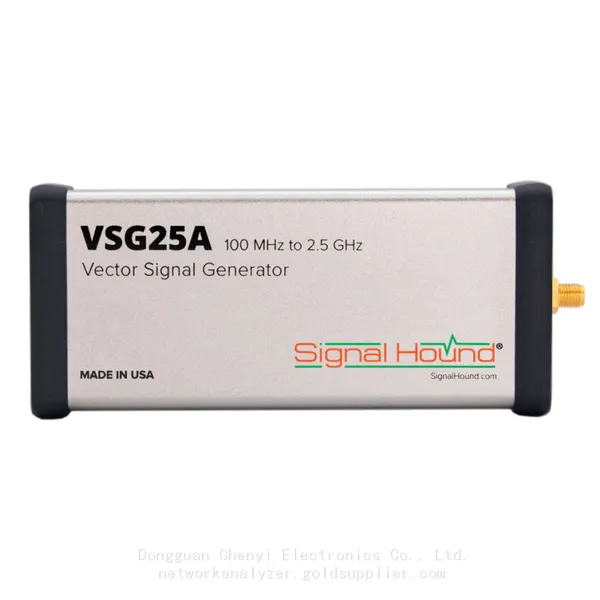
Signal Hound VSG25A 100 MHz to 2.5 GHz Vector Signal GeneratorNegotiableMOQ: 1 Unit
-
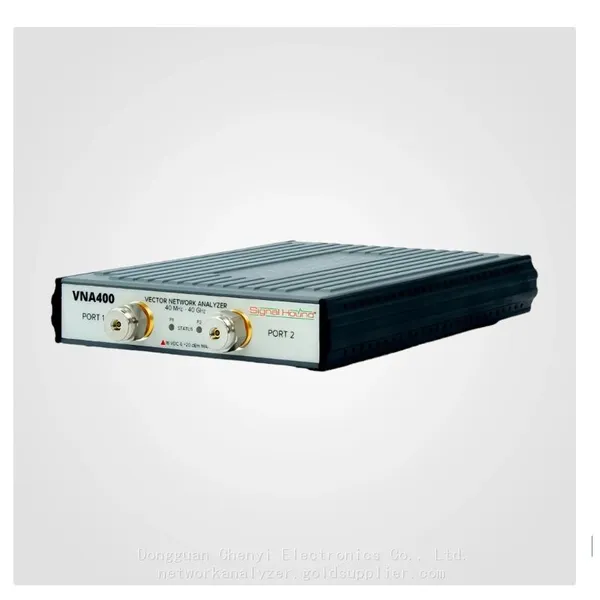
Signal Hound VNA400 40 MHz to 40 GHz 2-port Vector Network AnalyzerNegotiableMOQ: 1 Unit
-
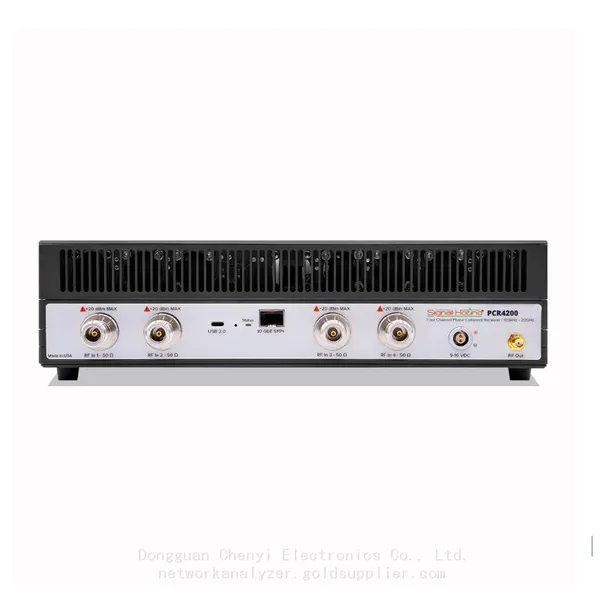
Signal Hound PCR4200 100 KHz to 20 GHz Four-Channel Phase Coherent ReceiverNegotiableMOQ: 1 Unit
-
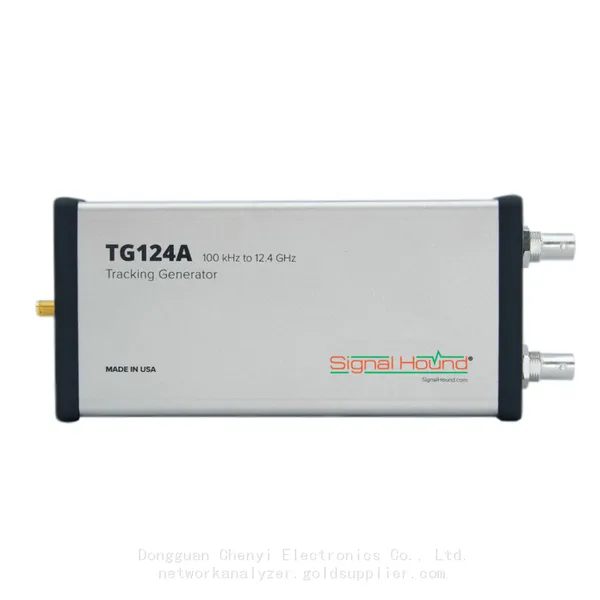
Signal Hound TG124A 100 KHz to 12.4 GHz Tracking GeneratorNegotiableMOQ: 1 Unit
-
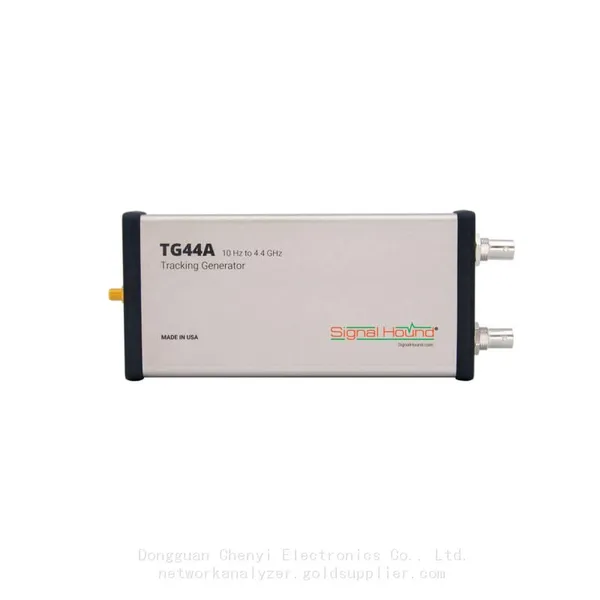
Signal Hound TG44A 10 Hz to 4.4 GHz t Tracking GeneratorNegotiableMOQ: 1 Unit
-
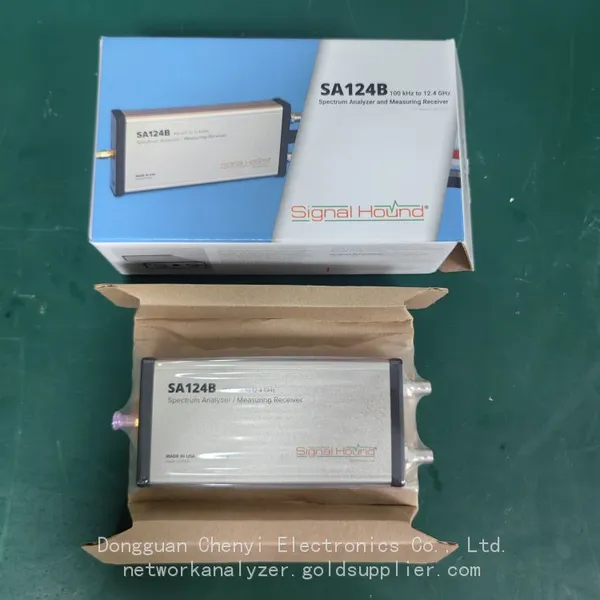
Signal Hound SA124B 100 KHz to 12.4 GHz Spectrum AnalyzerNegotiableMOQ: 1 Unit
-
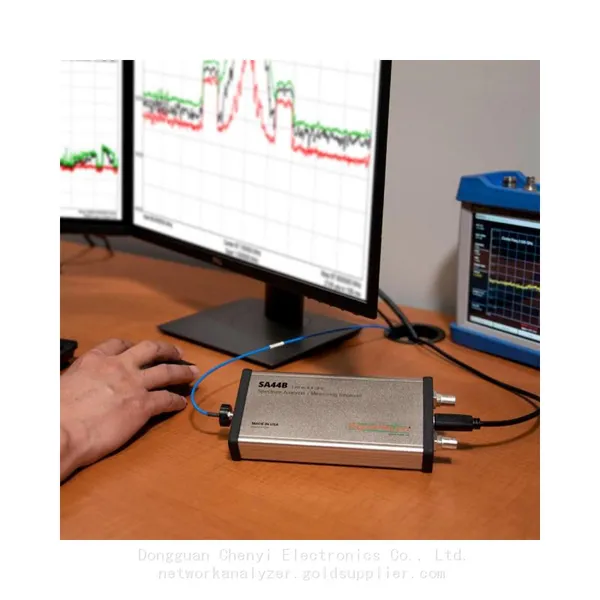
Signal Hound SA44B 1 Hz to 4.4 GHz Spectrum AnalyzerNegotiableMOQ: 1 Unit
-
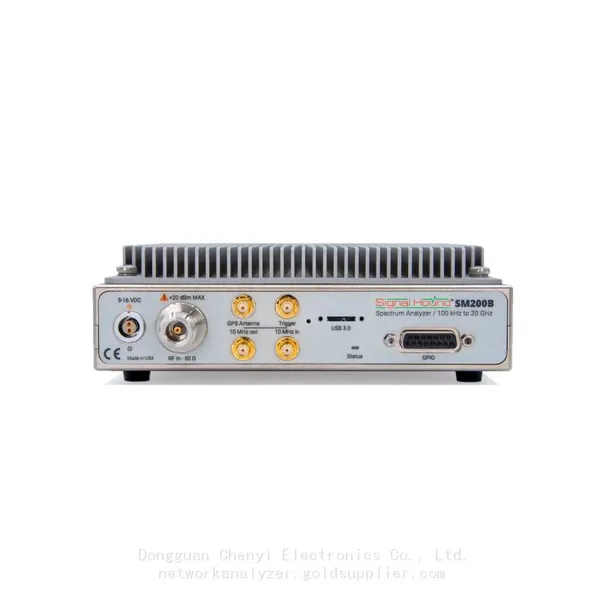
Signal Hound SM200B 100 KHz to 20 GHz Real-time Spectrum Analyzer Monitoring ReceiversNegotiableMOQ: 1 Unit
-
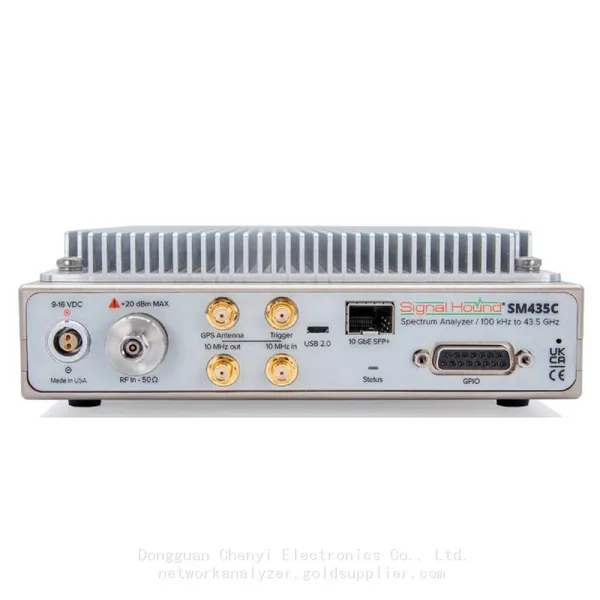
Signal Hound SM435C 100 KHz to 43.5GHz Real-time Spectrum Analyzer With 10GbE Monitoring ReceiversNegotiableMOQ: 1 Unit
-
Signal Hound SM435B 100 KHz to 43.5GHz Real-time Spectrum Analyzer Monitoring ReceiversNegotiableMOQ: 1 Unit
-
Signal Hound PN400 Phase Noise and VCO Test System 100 KHz to 43.5 GHzNegotiableMOQ: 1 Unit
-
Keysight E4980A Precision LCR Meter 20 Hz to 2 MHzNegotiableMOQ: 1 Unit
-
Keysight E4980B and E4980BL Precision LCR Meter 20 Hz to 2 MHzNegotiableMOQ: 1 Unit
-
Keysight U1733C Handheld LCR Meter 100Hz 120Hz 1kHz 10kHz 100kHzNegotiableMOQ: 1 Unit