
 Business License

Real-Time Spectrum Analyzer vs Traditional Swept Spectrum Analyzer: Which One Fits Modern RF Testing
1. The Purchase Decision That Engineers Keep Getting Wrong
A test equipment manager at a contract manufacturer ordered three traditional swept spectrum analyzers for a new production line, citing lower unit cost and familiarity with the interface. Six months later, the line was rejecting roughly 2% of Bluetooth modules for intermittent RSSI failures that the swept analyzers could not reproduce. The team spent an estimated 160 engineering hours chasing a problem that a real-time spectrum analyzer would have captured in the first hour of testing. The cost of those three swept analyzers plus the wasted engineering time exceeded what two RTSAs would have cost, without solving the problem.
This pattern repeats across RF labs, production floors, and field service operations. Engineers default to the instrument type they trained on without asking whether the measurement task has changed since that training. The choice between a real-time spectrum analyzer and a traditional swept spectrum analyzer is not a matter of old versus new technology. It is a decision about what kinds of signals you need to measure and what happens when you miss one.
2. Two Architectures, Two Philosophies
The traditional swept-tuned spectrum analyzer uses a superheterodyne architecture. A local oscillator sweeps across the frequency range, a narrow resolution bandwidth filter measures the power at each step, and the display builds up one pixel at a time. This approach produces excellent dynamic range because the narrow filter rejects noise and adjacent signals before the detector. The trade-off is speed: covering a wide span means stepping through thousands of frequency points, each requiring settling time for the RBW filter.
The real-time spectrum analyzer takes the opposite approach. It digitizes the entire bandwidth of interest in a single acquisition, then uses an FPGA-based FFT engine to compute the complete spectrum in parallel. No sweeping, no stepped filters, no sequential measurement. The trade-off here is that the wideband ADC has a higher noise floor per unit bandwidth than a narrowband swept receiver, so the instantaneous dynamic range is lower. For catching transient signals, however, the difference is categorical: a swept analyzer is blind to most of the spectrum most of the time, while an RTSA sees everything within its real-time bandwidth continuously.
3. Speed: The Gap That Defines the Categories
A traditional swept analyzer covering 9 kHz to 6 GHz with a 10 kHz RBW might take roughly 5 seconds for a full sweep. During those 5 seconds, thousands of individual frequency measurements happen sequentially. If a signal appears only during a 20-millisecond window when the analyzer is tuned to a different part of the span, it is invisible. The signal must persist long enough for the sweep to reach its frequency, settle, measure, and move on.
An RTSA covering the same frequency range digitizes the real-time bandwidth (say 27 MHz or 40 MHz) and computes tens of thousands of complete spectra per second. A signal lasting 12 microseconds is captured with 100% probability as long as the POI specification of the instrument is shorter than the signal duration. The RTSA then tunes to the next 40 MHz block to cover the full span, but within each block, nothing is missed.
The difference in practical terms is stark. A Bluetooth inquiry scan hops across 32 channels at 1,600 hops per second. A swept analyzer sees a smeared, averaged version of the spectrum with individual hops invisible. An RTSA with sufficient real-time bandwidth captures every hop, showing frequency, timing, power, and modulation envelope for each one. If your measurement involved anything that changes faster than roughly once per second, the RTSA is not just faster; it reveals signal behavior the swept analyzer fundamentally cannot measure.
4. Probability of Intercept: The Metric That Matters Most
For intermittent and transient signals, probability of intercept determines whether you find the problem or waste days chasing a ghost. The table below compares the POI characteristics of each architecture.
| Characteristic | Swept Spectrum Analyzer | Real-Time Spectrum Analyzer |
|---|---|---|
| POI for 10-microsecond signal | Roughly 0.0002% (essentially zero) | 100% (within real-time BW) |
| POI for 1-millisecond signal | Roughly 0.02% (still negligible) | 100% (within real-time BW) |
| POI for CW signal | 100% (eventually found during sweep) | 100% |
| Minimum signal duration for reliable detection | Must persist longer than full sweep time | As short as POI spec (microseconds) |
| Dead time between measurements | Substantial (tuning, settling, processing) | Zero (gap-free within real-time BW) |
The POI difference explains why EMI debugging with a swept analyzer often becomes a guessing game. A digital clock harmonic that rings for 50 nanoseconds every 10 microseconds produces a broad spectral signature that a swept analyzer might detect as an elevated noise floor. But the analyzer cannot show the time-domain pattern, the repetition rate, or the exact frequency of the ringing. An RTSA in spectrogram mode reveals all three, letting the engineer trace the emission to a specific net on the PCB rather than blind-guessing which trace is radiating.
5. Dynamic Range: Where Swept Still Holds an Edge
For measurements that demand the lowest possible noise floor and the highest dynamic range, a swept analyzer still excels. The narrowband IF filtering before the detector removes wideband noise, producing a displayed average noise level that can reach roughly -165 dBm/Hz in high-end swept instruments. An RTSA digitizing 40 MHz of bandwidth has a DANL more typically around -155 to -160 dBm/Hz.
This 5 to 10 dB difference matters when measuring very weak signals near the noise floor, such as spurious emissions from a transmitter that must meet a -60 dBc regulatory limit, or when characterizing the phase noise of an ultra-low-jitter oscillator. For these measurements, many engineers use a swept analyzer for the deep dynamic range and keep an RTSA on the bench for transient hunting. At Dongguan Chenyi Electronics, we see customers routinely purchasing one of each type to cover both measurement domains.
Spurious-free dynamic range follows a similar pattern. A swept analyzer achieves roughly 80 to 105 dB SFDR through narrowband filtering. An RTSA manages roughly 60 to 85 dB SFDR in real-time mode, limited by the ADC's linearity over wide bandwidth. For general-purpose bench work, both ranges are adequate. The SFDR difference becomes relevant when measuring signals with large amplitude disparities, such as a receiver's ability to detect a weak wanted signal in the presence of a strong adjacent-channel interferer.
6. Cost, Size, and Portability
The physical form factor of the two instrument types has converged more than their architectures have. Traditional swept analyzers once meant heavy benchtop boxes weighing 10 to 20 kilograms. Today, USB-powered swept analyzers weigh under a kilogram and fit in a laptop bag alongside a USB real-time analyzer. The cost gap has narrowed as well, though a swept analyzer still costs less than an RTSA with equivalent frequency range from the same manufacturer.
The more useful comparison is capability per dollar for a specific measurement task. An engineer who only measures CW transmitter power, harmonic levels, and antenna return loss gains nothing from paying the RTSA premium. An engineer who troubleshoots wireless coexistence, hunts intermittent interference, or verifies frequency-hopping compliance gains everything from the RTSA and wastes money on a swept analyzer that cannot see the signals of interest.
Chenyi Electronics guides customers through this analysis as a routine part of the sales process. We ask what signals the customer measures today, what problems they have failed to solve, and what new wireless technologies their products will incorporate over the next three years. The answer to those three questions determines the instrument type more reliably than any spec sheet comparison.
7. Application Fit: A Practical Decision Matrix
Not every RF measurement benefits from real-time processing. The table below maps common measurement tasks to the appropriate instrument type.
| Measurement Task | Best Fit | Reason |
|---|---|---|
| CW transmitter output power and harmonics | Swept analyzer | Stable signals, deep dynamic range preferred |
| Filter and amplifier frequency response | Swept analyzer (with tracking generator) | Swept scalar analysis is standard for this |
| Phase noise measurement (oscillator characterization) | Swept analyzer or dedicated PN tester | Deep dynamic range and low close-in noise needed |
| Bluetooth/Wi-Fi coexistence debugging | RTSA | Intermittent collisions invisible to swept analysis |
| EMI pre-compliance scanning | RTSA | Captures transient emissions swept analyzers miss |
| Frequency-hopping signal characterization | RTSA | Swept analyzer cannot track hop sequence or timing |
| Production-line occupied bandwidth testing | RTSA | Single-acquisition measurement, much faster throughput |
| Field interference hunting | RTSA (portable) | Need spectrogram and persistence to find intermittent sources |
Some time ago, an RF design consultancy in Southeast Asia approached Dongguan Chenyi Electronics after a frustrating experience with a swept analyzer on a smart-home product project. The product combined Wi-Fi, Zigbee, and Bluetooth in a single enclosure, and the team could not explain why Zigbee packet error rates spiked every few minutes in field testing. They borrowed a portable RTSA and within an afternoon had captured the pattern: a Wi-Fi beacon burst from a nearby access point on channel 6 was momentarily desensing the Zigbee front end on an overlapping 2.4 GHz channel. The swept analyzer had averaged the Wi-Fi bursts into the noise floor. Armed with the spectrogram data, the team changed the Zigbee channel assignment and reduced the packet error rate from roughly 8% to under 0.1%.
A separate case involved a calibration lab that needed to verify the spectral purity of reference oscillators down to -140 dBc/Hz at 10 kHz offset. For this work, the deep dynamic range of a high-end swept analyzer with a dedicated phase noise measurement application was essential. The RTSA on the same bench did not have the DANL or close-in phase noise to make the measurement. Chenyi supplied both instruments, and the lab uses the swept analyzer for oscillator work and the RTSA for modulation analysis and transient troubleshooting.
8. Making the Final Choice
Start with the signals. If every signal you measure is continuous, stable, and always present, a swept analyzer may serve you well at a lower cost. If any signal you need to capture is intermittent, pulsed, hopping, bursting, or transient, the RTSA is the correct tool and the swept analyzer is the wrong one regardless of price. The cost of missing a transient signal in EMI debugging, production test, or field troubleshooting is almost always higher than the price difference between the two instrument types.
Next, consider your workflow. An RTSA can operate in swept mode for narrow-span measurements, making it a more versatile single-instrument solution. Many modern instruments, including several available through Dongguan Chenyi Electronics, combine both modes so that you get real-time capability when you need it and deep dynamic range when you do not. This hybrid approach has become the practical default for labs that can afford only one spectrum analyzer.
Consider the signals that will matter two years from now, not just the ones on your bench today. The density of wireless devices continues to increase across all environments, making coexistence testing and interference hunting more common, not less. An instrument purchase that covers only today's steady-state CW measurements may leave you unable to solve tomorrow's intermittent problems.
9. Frequently Asked Questions
9.1 Can I use a swept analyzer for EMI pre-compliance if I run multiple sweeps?
Running multiple sweeps with max hold improves the chances of catching a transient emission compared to a single sweep, but it does not approach the probability of intercept of an RTSA. A transient emission that lasts 100 microseconds and occurs once per second has roughly a 0.01% chance of being captured in any given sweep. Running 100 sweeps raises the cumulative probability but still leaves a substantial chance of missing it. CISPR and FCC test standards increasingly expect time-domain scan methods for emissions above 1 GHz, which effectively require real-time or FFT-based analysis. For serious pre-compliance work, an RTSA is the practical minimum.
9.2 Do RTSAs cost significantly more than swept analyzers?
The price gap has narrowed substantially. Entry-level USB real-time spectrum analyzers now compete directly with mid-range swept analyzers on price while offering real-time bandwidths of roughly 10 MHz to 27 MHz. At the high end, an RTSA with 100 MHz or more of real-time bandwidth costs more than an equivalently ranged swept analyzer, but the capability difference justifies the premium for transient-heavy applications. Dongguan Chenyi Electronics stocks instruments across the full price spectrum and helps customers match capability to budget without overspending.
9.3 If I buy an RTSA, do I still need a swept analyzer?
For most labs, a single modern RTSA with a good swept mode covers the majority of day-to-day measurements. The exception is when you need the 5 to 10 dB of extra dynamic range that a dedicated swept analyzer provides, typically for very low phase noise measurements or spurious searches requiring the deepest noise floor. Labs that do both oscillator characterization and wireless system integration often keep one of each. Labs focused on communications, IoT, and EMC work can usually consolidate to a single RTSA.
9.4 What real-time bandwidth do I actually need?
Match the real-time bandwidth to the widest signal you need to capture in a single acquisition. For narrowband IoT and sub-GHz ISM work, 10 MHz to 27 MHz is sufficient. For Wi-Fi 6 channel analysis, 40 MHz to 80 MHz covers the full channel bandwidth. For wideband satellite transponder or radar pulse analysis, 100 MHz to 160 MHz or more is necessary. The team at Chenyi Electronics can walk through this calculation based on your specific device under test and test plan requirements.
Recently Posted
-
Understanding Spectrum Analyzer Key Specifications: DANL, Phase Noise, TOI, and RBW
August 14, 20261. The Specification That Cost Two Weeks of DebuggingAn RF design team spent two weeks trying to measure the third harmonic of a 2 Read More
 -
What Is a Real-Time Spectrum Analyzer? A Beginner's Guide for RF Engineers
August 11, 20261. Why Spectrum Analysis Goes Beyond Simple Power MeasurementA team at a wireless module factory spent three weeks chasing an inte Read More
 -
Signal Hound SM200B for University RF Laboratory Teaching & Scientific Research
July 20, 2026Signal Hound SM200B for University RF Laboratory Teaching & Scientific ResearchUniversity electronic information, communicatio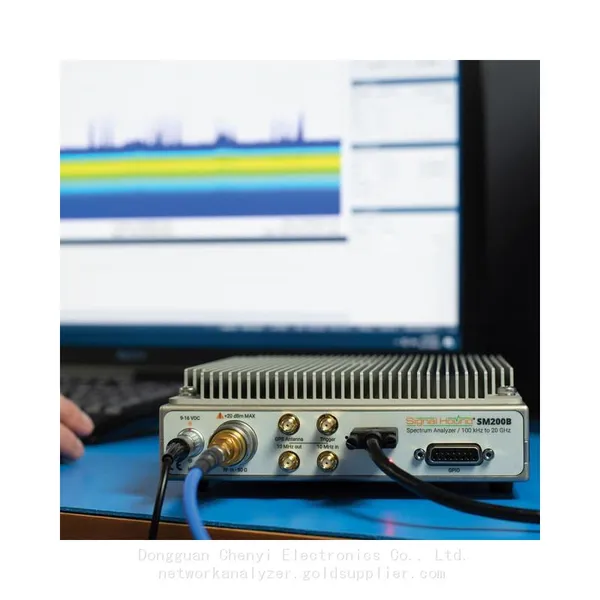 Read More
 -
Why Signal Hound SM200B is the Best Portable Monitoring Receiver for 5G RF Testing
July 15, 2026Why Signal Hound SM200B is the Best Portable Monitoring Receiver for 5G RF TestingWith the rapid global popularization of 5G commu Read More

Contact Us
Recommended Products
-
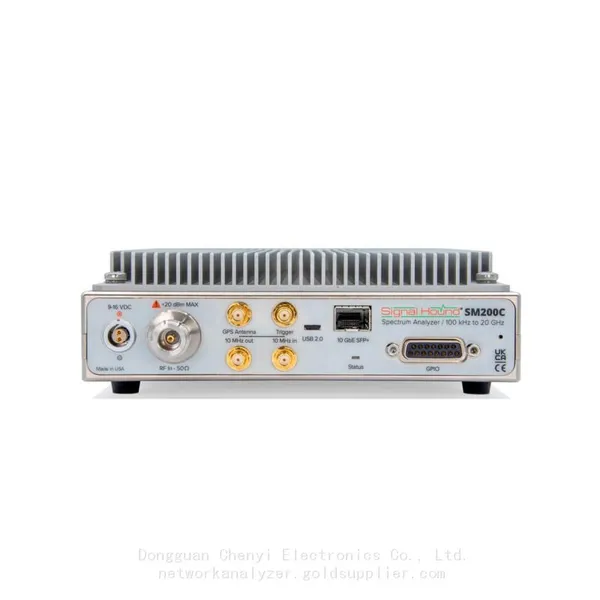
 Signal Hound SM200C 100 KHz to 20 GHz Real-time Spectrum Analyzer With 10GbE Monitoring ReceiversNegotiableMOQ: 1 Unit
 -
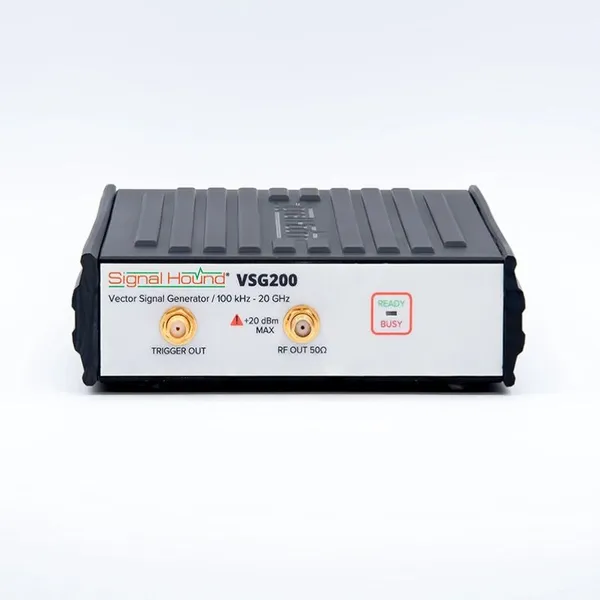
Signal Hound VSG200 Vector Signal Generator 100 KHz to 20 GHzNegotiableMOQ: 1 Unit
-
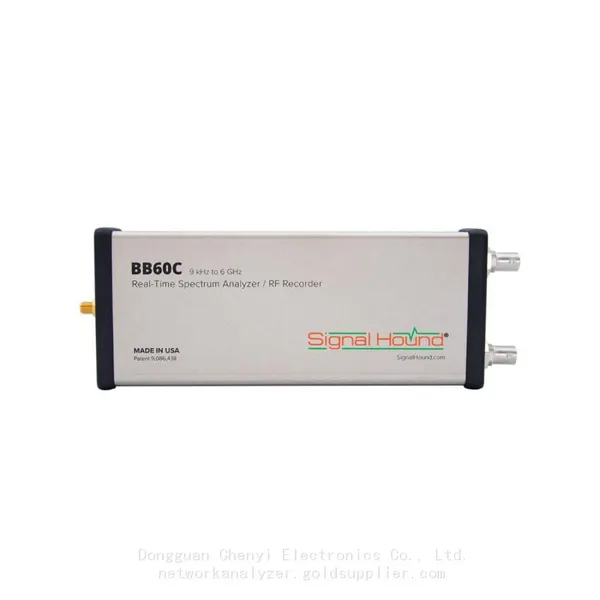
Signal Hound BB60C 9 KHz to 6 GHz Real-time Spectrum AnalyzerNegotiableMOQ: 1 Unit
-
Signal Hound BB60D 9 KHz to 6 GHz Real-time Spectrum AnalyzerNegotiableMOQ: 1 Unit
-
Signal Hound SP145 100 KHz to 14.5 GHz Real-time Spectrum Analyzer Monitoring ReceiversNegotiableMOQ: 1 Unit
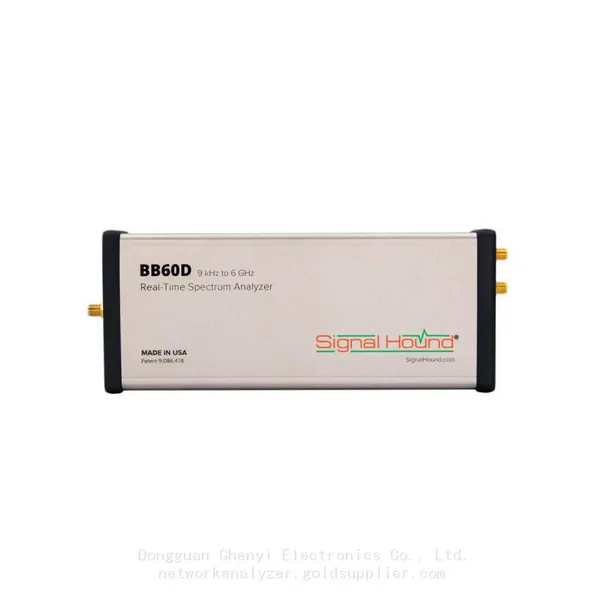
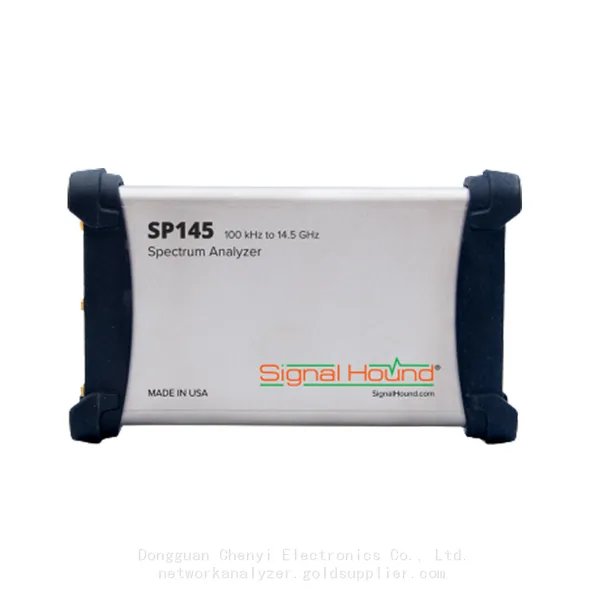
-
Signal Hound VSG60A 50 MHz to 6 GHz GHz Vector Signal GeneratorNegotiableMOQ: 1 Unit
-
Signal Hound VSG25A 100 MHz to 2.5 GHz Vector Signal GeneratorNegotiableMOQ: 1 Unit
-
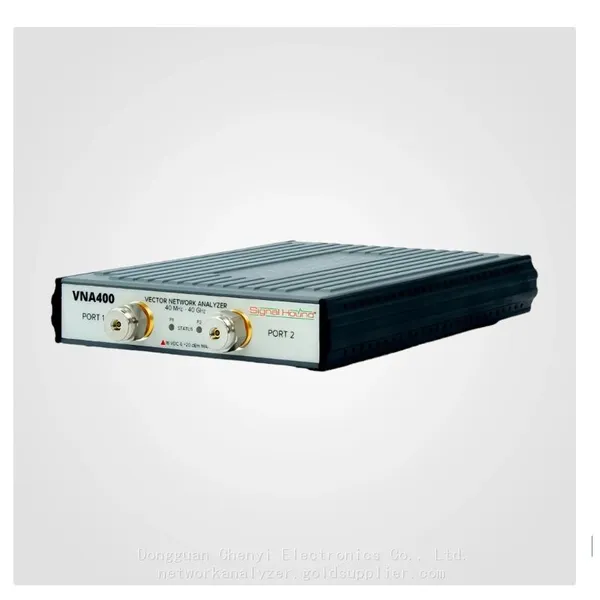
Signal Hound VNA400 40 MHz to 40 GHz 2-port Vector Network AnalyzerNegotiableMOQ: 1 Unit
-
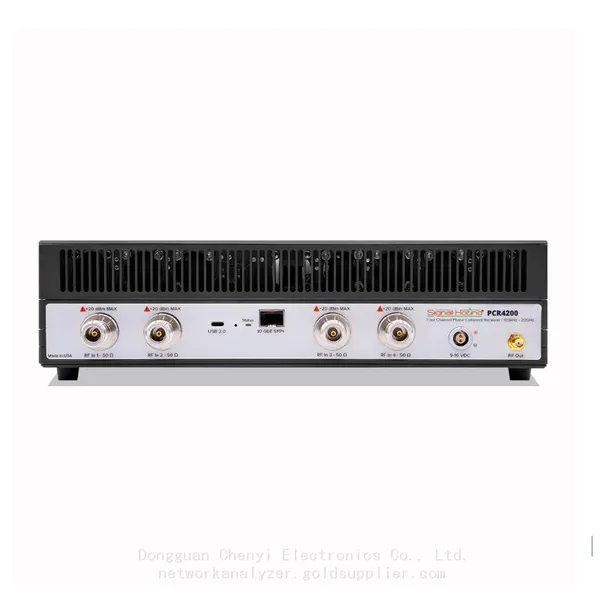
Signal Hound PCR4200 100 KHz to 20 GHz Four-Channel Phase Coherent ReceiverNegotiableMOQ: 1 Unit
-
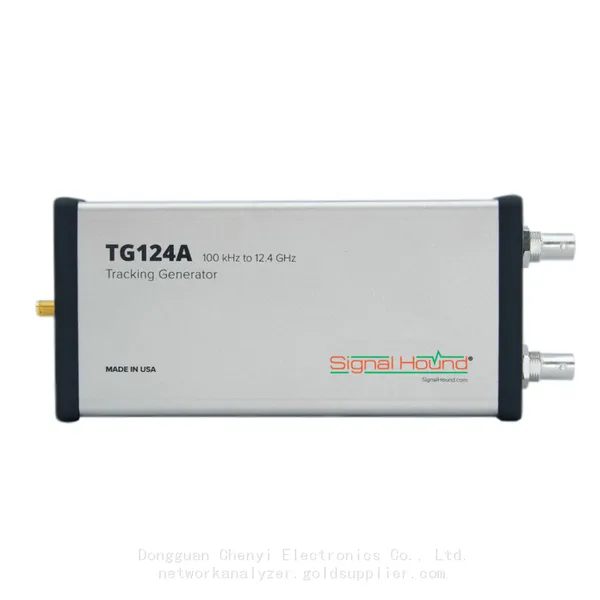
Signal Hound TG124A 100 KHz to 12.4 GHz Tracking GeneratorNegotiableMOQ: 1 Unit
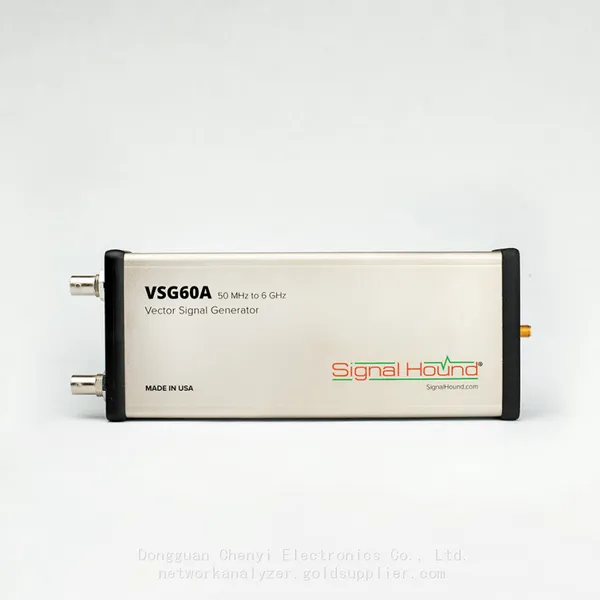
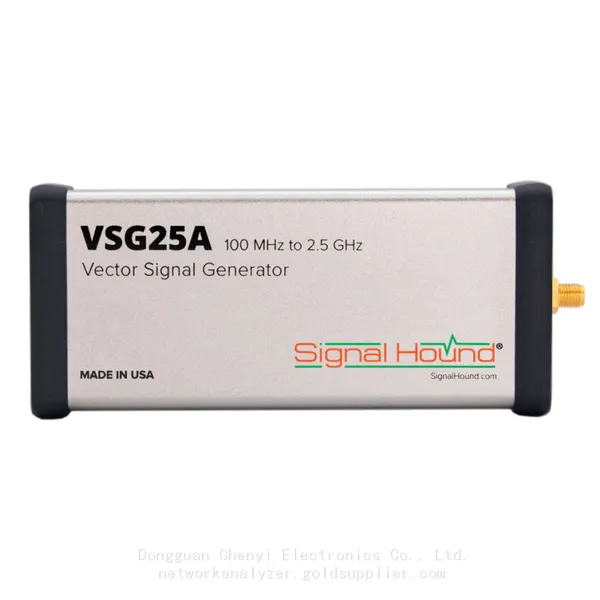
-
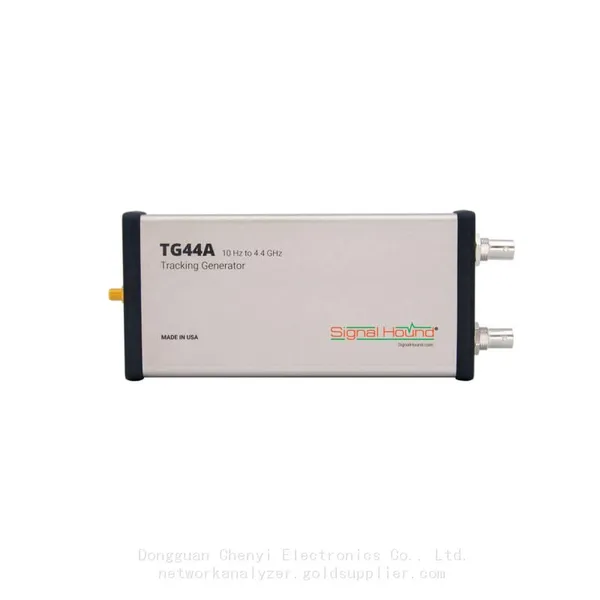
Signal Hound TG44A 10 Hz to 4.4 GHz t Tracking GeneratorNegotiableMOQ: 1 Unit
-
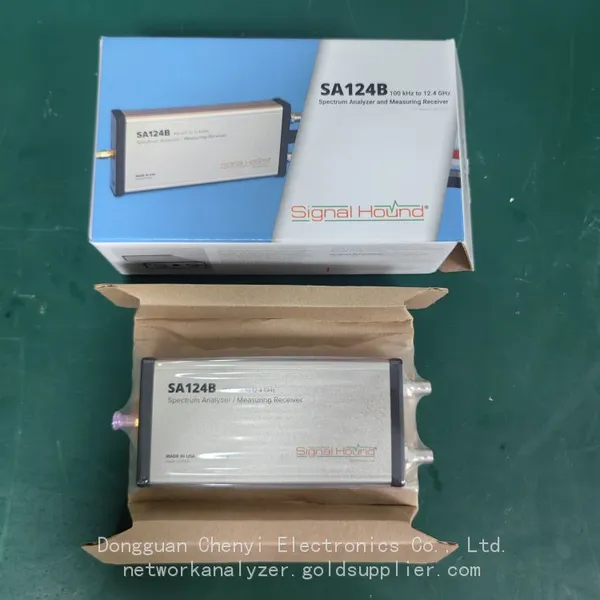
Signal Hound SA124B 100 KHz to 12.4 GHz Spectrum AnalyzerNegotiableMOQ: 1 Unit
-
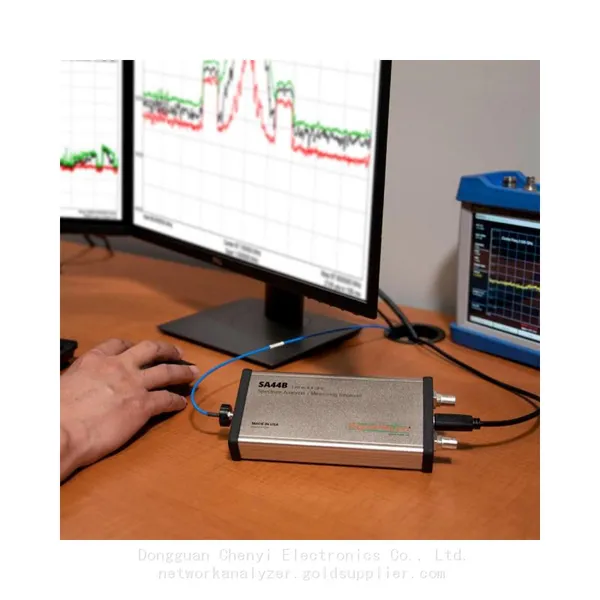
Signal Hound SA44B 1 Hz to 4.4 GHz Spectrum AnalyzerNegotiableMOQ: 1 Unit
-
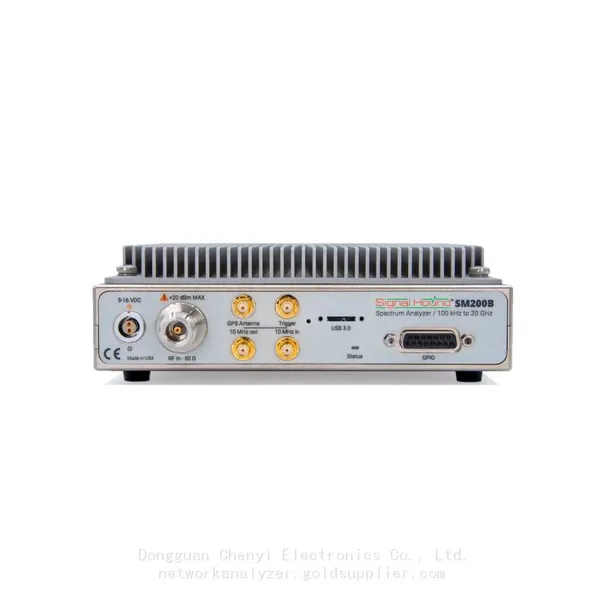
Signal Hound SM200B 100 KHz to 20 GHz Real-time Spectrum Analyzer Monitoring ReceiversNegotiableMOQ: 1 Unit
-
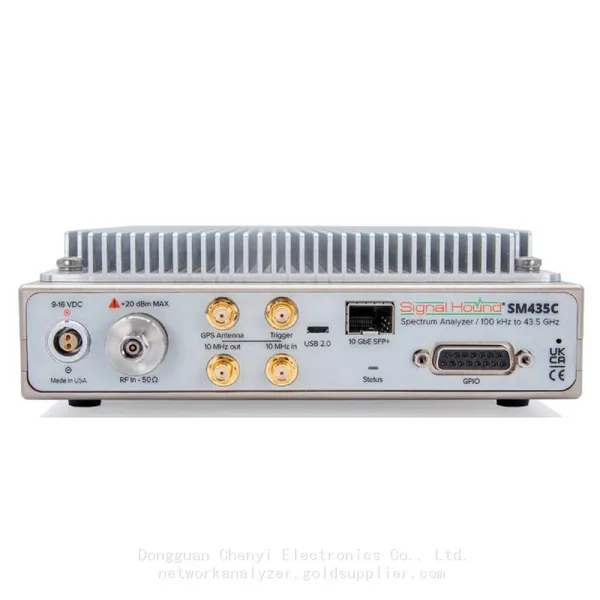
Signal Hound SM435C 100 KHz to 43.5GHz Real-time Spectrum Analyzer With 10GbE Monitoring ReceiversNegotiableMOQ: 1 Unit
-
Signal Hound SM435B 100 KHz to 43.5GHz Real-time Spectrum Analyzer Monitoring ReceiversNegotiableMOQ: 1 Unit
-
Signal Hound PN400 Phase Noise and VCO Test System 100 KHz to 43.5 GHzNegotiableMOQ: 1 Unit
-
Keysight E4980A Precision LCR Meter 20 Hz to 2 MHzNegotiableMOQ: 1 Unit
-
Keysight E4980B and E4980BL Precision LCR Meter 20 Hz to 2 MHzNegotiableMOQ: 1 Unit
-
Keysight U1733C Handheld LCR Meter 100Hz 120Hz 1kHz 10kHz 100kHzNegotiableMOQ: 1 Unit