
 Business License

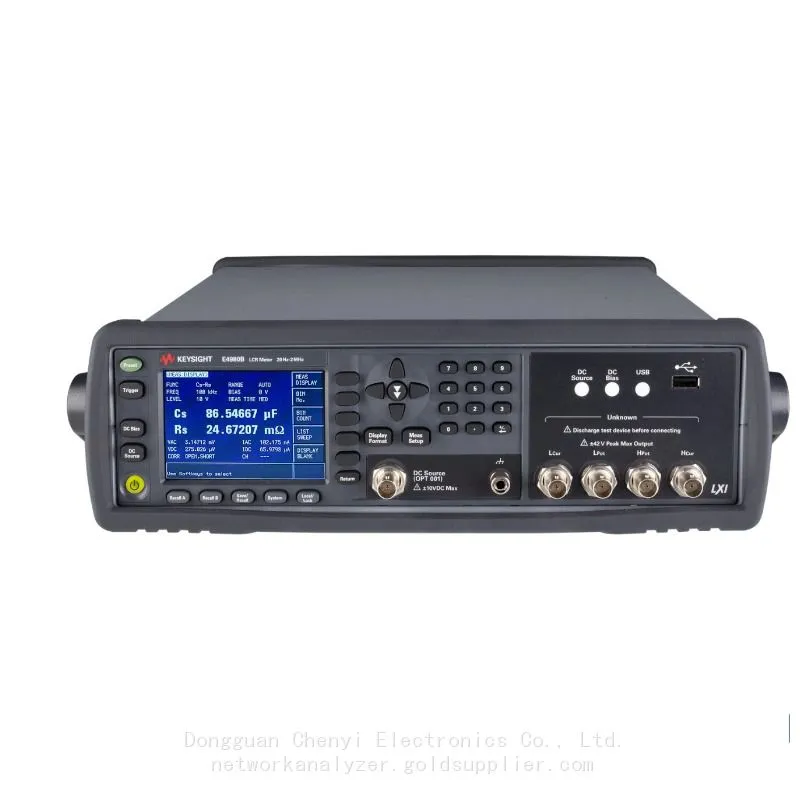
Key Differences: Keysight E4980B vs. E4980BL Precision LCR Meters
Key Differences: Keysight E4980B vs. E4980BL Precision LCR Meters
I. Introduction: Understanding the E4980 Series’ Target Use Cases
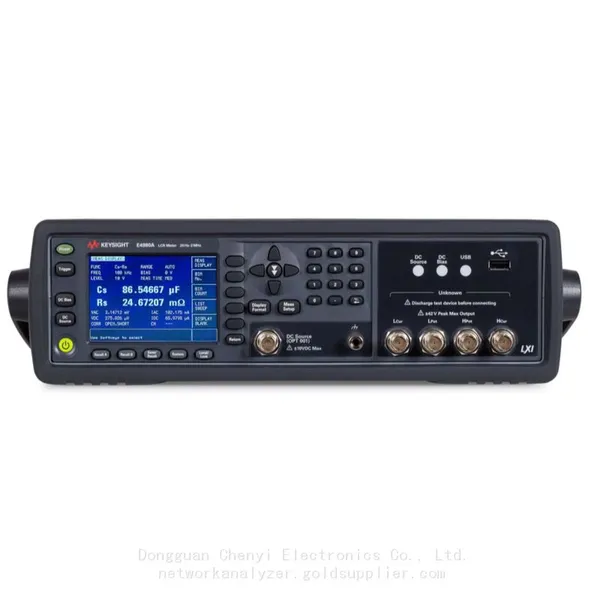
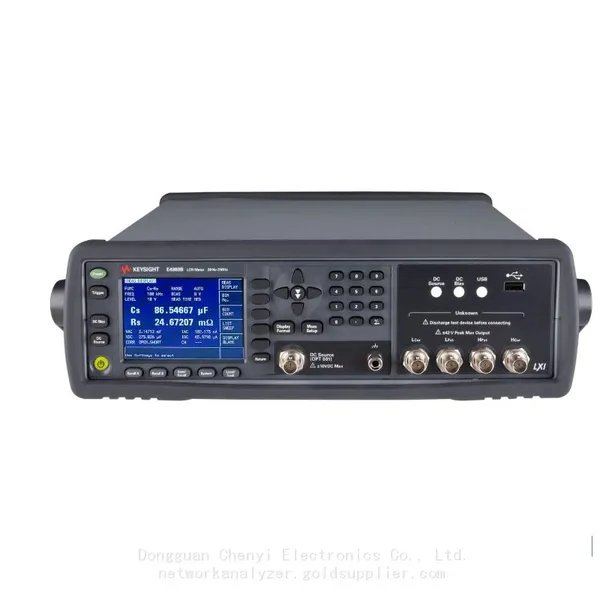
Keysight’s E4980 series has long been the gold standard for precision impedance measurements, trusted by engineers in electronics manufacturing, material science, and component design. The E4980B Precision LCR Meter and its low-power variant, the E4980BL Precision LCR Meter, share a core focus on accuracy—but are optimized for distinct scenarios.
The E4980B caters to high-frequency, high-performance component testing (e.g., RF filters, power inductors), while the E4980BL is tailored for low-power applications (e.g., IoT sensors, wearable devices) where measurement signal amplitude must be minimized to avoid disrupting sensitive circuits. Understanding their key differences is critical for selecting the right tool for your impedance characterization needs.
II. Core Specification Comparison: At a Glance
Below is a detailed breakdown of the technical differences between the E4980B and E4980BL, highlighting the parameters that matter most for real-world testing:
Specification Category | Keysight E4980B | Keysight E4980BL | Key Difference |
Frequency Range | 20Hz – 2MHz (Standard); Up to 3GHz (Option 001/002) | 20Hz – 2MHz (Standard); Up to 1MHz (No high-frequency options) | E4980B supports RF/microwave component testing; E4980BL is limited to low/medium frequencies |
Measurement Signal Level | 10mVrms – 2Vrms (Adjustable in 1mV steps) | 100μVrms – 2Vrms (Adjustable in 1μV steps) | E4980BL offers ultra-low signal levels (100μVrms) for low-power device testing |
Basic Measurement Accuracy | ±0.05% (Typical, 1kHz – 1MHz) | ±0.08% (Typical, 1kHz – 1MHz) | E4980B delivers higher precision for critical high-accuracy applications |
Impedance Range | 1mΩ – 100MΩ | 1mΩ – 100MΩ | Identical range; no difference in impedance coverage |
Measurement Speed | 0.6ms (Fast Mode); 3ms (High-Accuracy Mode) | 0.8ms (Fast Mode); 4ms (High-Accuracy Mode) | E4980B is ~30% faster for high-throughput testing (e.g., production lines) |
Low-Power Optimization | None – Minimum signal level 10mVrms | Yes – 100μVrms minimum + Low-Impedance Drive (LID) mode | E4980BL avoids activating semiconductor junctions in low-power components |
High-Frequency Options | Available (Option 001: 20Hz–1GHz; Option 002: 20Hz–3GHz) | Not available – Max frequency fixed at 2MHz | E4980B supports RF component testing (e.g., 5G filters, GHz-range inductors) |
Temperature Compensation | Optional (Option 010: -40°C to 150°C) | Optional (Option 010: -40°C to 150°C) | Identical temperature testing capabilities |
Form Factor | Benchtop (426mm × 177mm × 399mm) | Benchtop (426mm × 177mm × 399mm) | Same physical size; interchangeable in test setups |
Power Consumption | 100VA (Typical) | 85VA (Typical) | E4980BL is more energy-efficient for continuous operation |
III. Deep Dive into Key Functional Differences
1. Frequency Range & High-Frequency Capabilities
The most significant difference lies in high-frequency support. The E4980B can be upgraded to 1GHz (Option 001) or 3GHz (Option 002), making it ideal for testing RF/microwave components like:
• 5G base station filters (2.4GHz, 3.5GHz)
• High-frequency inductors for power amplifiers
• RF capacitors (e.g., MLCCs for GHz applications)
In contrast, the E4980BL is limited to 2MHz maximum frequency—no high-frequency upgrades are available. This makes it unsuitable for RF testing but perfectly adequate for low/medium-frequency components:
• Passive components for IoT devices (1kHz – 1MHz)
• Battery-powered sensor modules
• Audio equipment components
Real-World Example: A 5G component manufacturer uses the E4980B (Option 002) to test 3GHz bandpass filters, verifying impedance matching and insertion loss. For their low-power sensor division, they use the E4980BL to characterize 1MHz inductors without damaging the sensors’ low-voltage circuits.
2. Measurement Signal Level: Low-Power vs. High-Performance
The E4980BL’s standout feature is its ultra-low signal level range (100μVrms – 2Vrms)—100x lower than the E4980B’s minimum (10mVrms). This is critical for:
• Testing low-power semiconductors (e.g., CMOS sensors, MEMS devices) where high signal levels can activate junctions or distort measurements
• Characterizing battery-powered components (e.g., wearable device capacitors) that operate at<1mV signal levels
• Material science applications (e.g., thin-film dielectrics) where excessive signal amplitude can alter material properties
The E4980B’s higher minimum signal level (10mVrms) is designed for:
• High-accuracy testing of power components (e.g., industrial inductors, power supply capacitors)
• Components that require higher signal amplitudes to stabilize measurements (e.g., large-value resistors)
• Production line testing where speed and signal-to-noise ratio (SNR) are prioritized
Technical Note: The E4980BL’s Low-Impedance Drive (LID) mode further reduces signal distortion by minimizing source impedance, making it ideal for testing sensitive low-impedance components (e.g.,<10Ω sensors).
3. Measurement Accuracy & Speed
While both meters offer industry-leading precision, the E4980B edges out the E4980BL in two key areas:
• Accuracy: ±0.05% typical (1kHz – 1MHz) vs. ±0.08% for the E4980BL. This difference matters for critical applications like aerospace component testing or reference standard calibration.
• Speed: 0.6ms per measurement (Fast Mode) vs. 0.8ms for the E4980BL. For high-throughput production lines (e.g., testing 10,000 capacitors per hour), the E4980B’s speed reduces cycle time by ~25%.
The E4980BL’s slightly lower accuracy and speed are tradeoffs for its low-power optimization—reducing signal level increases noise, requiring longer integration times to maintain reliability.
4. Application-Specific Features
Both meters share core features like:
• 12 measurement parameters (Z, Y, R, X, L, C, D, Q, θ, Rs, Rp, G)
• GPIB/LAN/USB connectivity for automation
• Compatibility with Keysight’s BenchVue software for data analysis
• Optional test fixtures (e.g., 16047A for surface-mount components)
However, the E4980B offers exclusive high-frequency features:
• RF Input Protection: Option 003 adds ±25V DC protection for RF components prone to voltage spikes
• High-Speed Data Logging: Supports 10,000 samples/second for transient impedance analysis (e.g., power inductor saturation)
• Vector Network Analyzer (VNA) Integration: Can be paired with Keysight VNAs for combined impedance and S-parameter testing
The E4980BL includes low-power-specific tools:
• Battery Drain Simulation: Measures component impedance at actual operating voltages (down to 100μV)
• Low-Power Component Library: Pre-configured test setups for IoT sensors, wearables, and medical devices
• Noise Reduction Mode: Extends integration time to 10ms for ultra-low-signal measurements (SNR improvement of 10dB)
IV. Use Case Matching: Which Meter Should You Choose?
Choose the E4980B If:
✅ You test RF/microwave components (frequency >2MHz, up to 3GHz)
✅ High accuracy (±0.05% or better) is non-negotiable (e.g., aerospace, calibration labs)
✅ You need high-throughput production testing (speed >1,000 components/hour)
✅ Your components require higher signal levels (≥10mVrms) for stable measurements
✅ Example Industries: 5G/telecom, aerospace & defense, power electronics
Choose the E4980BL If:
✅ You test low-power/low-voltage components (signal level mVrms)
✅ Your DUTs are sensitive to high signal amplitudes (e.g., IoT sensors, wearables, MEMS)
✅ You work with low/medium-frequency components (≤2MHz)
✅ Energy efficiency is important (e.g., battery-powered test setups)
✅ Example Industries: Consumer electronics, medical devices, IoT, material science
V. Practical Considerations for Selection
1. Total Cost of Ownership (TCO):
◦ The E4980B (base model: ~15,000) is ~20% more expensive than the E4980BL (~12,500). High-frequency options (Option 001/002) add 3,000–5,000.
◦ For low-power applications, the E4980BL avoids the need for external attenuators (saving 500–1,000 in accessories).
1. Upgrade Path:
◦ The E4980B can be upgraded to higher frequencies post-purchase (Option 001/002), while the E4980BL has no high-frequency upgrade options.
◦ Both can add temperature compensation (Option 010) and advanced fixtures later.
1. Automation Compatibility:
◦ Both support Keysight’s IVI-C drivers and Python/Matlab APIs for integration into automated test systems (ATE).
◦ The E4980B’s faster measurement speed makes it better for ATE production lines, while the E4980BL’s low-power mode is easier to integrate with battery-testing setups.
VI. Conclusion: Making the Right Choice
The Keysight E4980B and E4980BL are both exceptional precision LCR meters—but they serve distinct purposes. The E4980B is a versatile workhorse for high-frequency, high-accuracy testing, ideal for RF/telecom and aerospace applications. The E4980BL is a specialized tool for low-power, low-signal components, perfect for IoT, wearables, and medical device development.
When selecting between them, focus on three key questions:
1. What is the maximum frequency of your components? (If >2MHz, choose E4980B)
2. What is the operating signal level of your DUTs? (If mVrms, choose E4980BL)
3. What is your priority: speed/accuracy or low-power compatibility?
By aligning the meter’s capabilities with your specific testing needs, you’ll ensure reliable, repeatable results while optimizing your budget. Both meters uphold Keysight’s reputation for quality, so you can trust that whichever you choose, you’re getting a tool that will grow with your testing requirements.
Recently Posted
-
Vector Signal Generator Explained: Principles, Architecture, and Core Functions
August 31, 20261. When a Simple Signal Source Is Not EnoughAn R&D team developing a new Wi-Fi 6 access point spent a week validating their re Read More
 -
Software-Defined Instruments: How USB Spectrum Analyzers Are Changing the RF Testing Industry
August 17, 20261. The Benchtop Instrument That Would Not Fit in a Carry-OnAn RF field engineer arrived at a remote cell site in a mountainous reg Read More
 -
Spectrum Monitoring Solutions for Broadcast Radio and Television Transmission Stations
August 17, 20261. When a 50 kW FM Transmitter Goes SilentA regional FM broadcaster serving roughly 2 million listeners lost its main transmitter Read More
 -
Understanding Spectrum Analyzer Key Specifications: DANL, Phase Noise, TOI, and RBW
August 14, 20261. The Specification That Cost Two Weeks of DebuggingAn RF design team spent two weeks trying to measure the third harmonic of a 2 Read More

Contact Us
Recommended Products
-
 Signal Hound SM200C 100 KHz to 20 GHz Real-time Spectrum Analyzer With 10GbE Monitoring ReceiversNegotiableMOQ: 1 Unit
 -
Signal Hound VSG200 Vector Signal Generator 100 KHz to 20 GHzNegotiableMOQ: 1 Unit
-
Signal Hound BB60C 9 KHz to 6 GHz Real-time Spectrum AnalyzerNegotiableMOQ: 1 Unit
-
Signal Hound BB60D 9 KHz to 6 GHz Real-time Spectrum AnalyzerNegotiableMOQ: 1 Unit
-
Signal Hound SP145 100 KHz to 14.5 GHz Real-time Spectrum Analyzer Monitoring ReceiversNegotiableMOQ: 1 Unit
-
Signal Hound VSG60A 50 MHz to 6 GHz GHz Vector Signal GeneratorNegotiableMOQ: 1 Unit
-
Signal Hound VSG25A 100 MHz to 2.5 GHz Vector Signal GeneratorNegotiableMOQ: 1 Unit
-
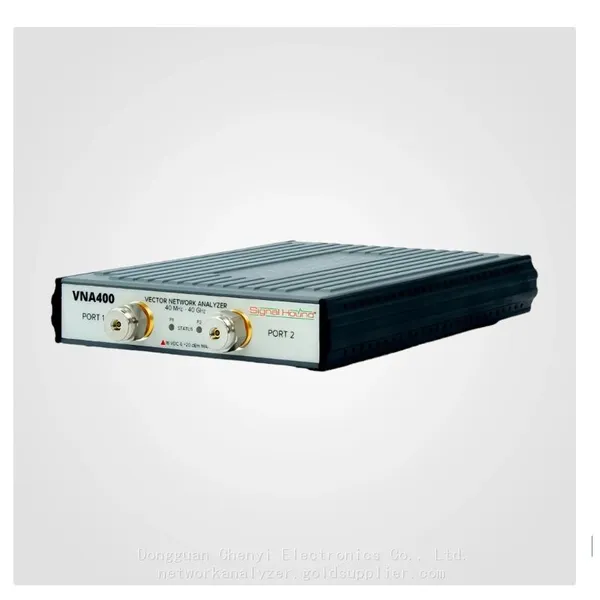
Signal Hound VNA400 40 MHz to 40 GHz 2-port Vector Network AnalyzerNegotiableMOQ: 1 Unit
-
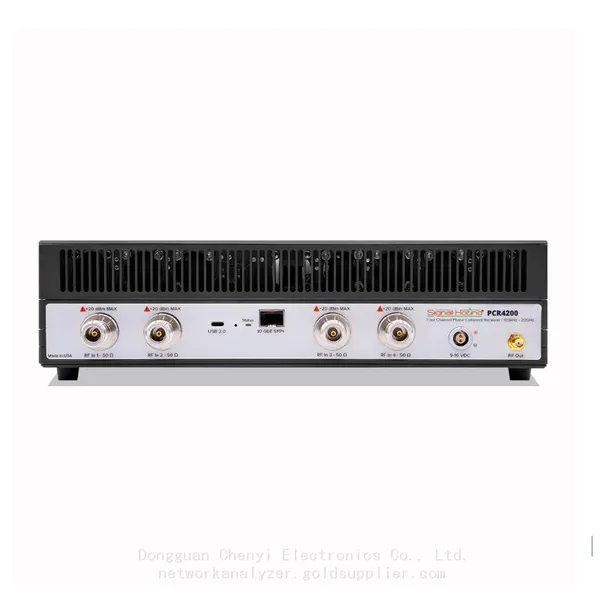
Signal Hound PCR4200 100 KHz to 20 GHz Four-Channel Phase Coherent ReceiverNegotiableMOQ: 1 Unit
-
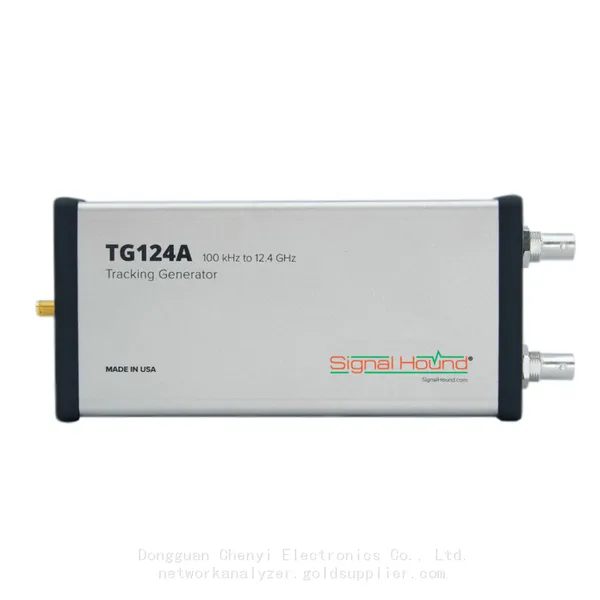
Signal Hound TG124A 100 KHz to 12.4 GHz Tracking GeneratorNegotiableMOQ: 1 Unit
-
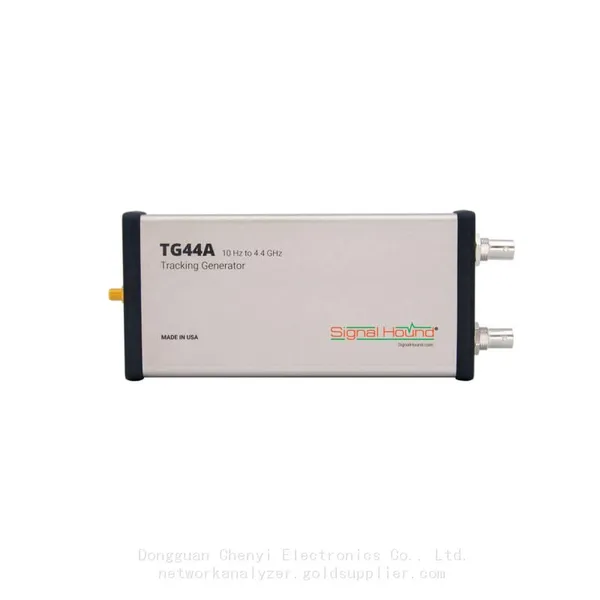
Signal Hound TG44A 10 Hz to 4.4 GHz t Tracking GeneratorNegotiableMOQ: 1 Unit
-
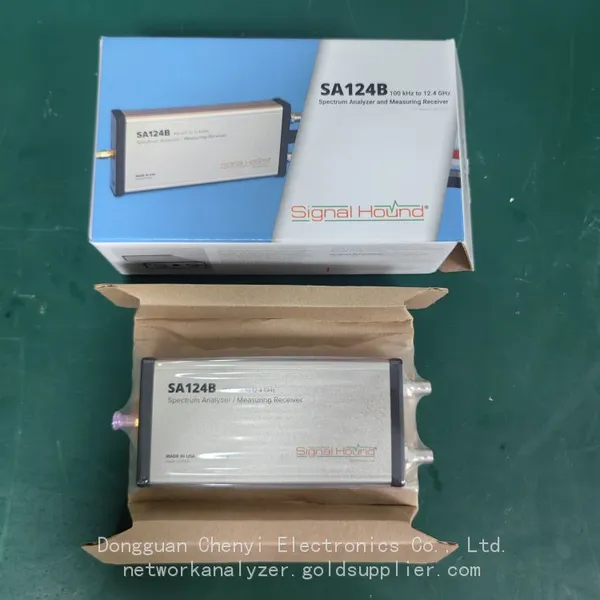
Signal Hound SA124B 100 KHz to 12.4 GHz Spectrum AnalyzerNegotiableMOQ: 1 Unit
-
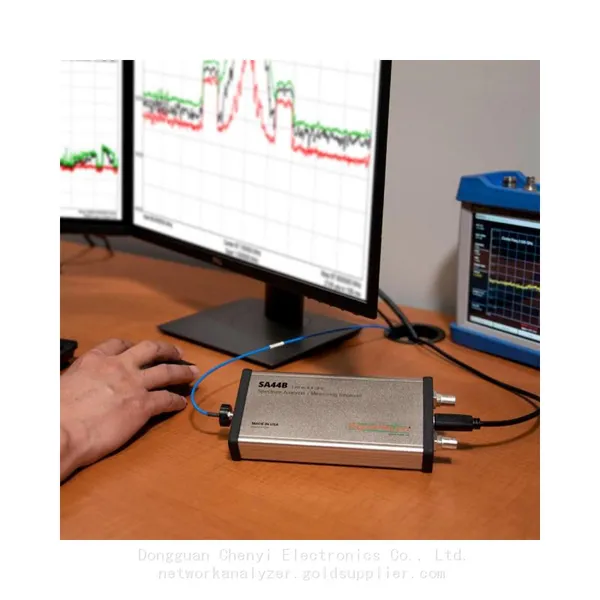
Signal Hound SA44B 1 Hz to 4.4 GHz Spectrum AnalyzerNegotiableMOQ: 1 Unit
-
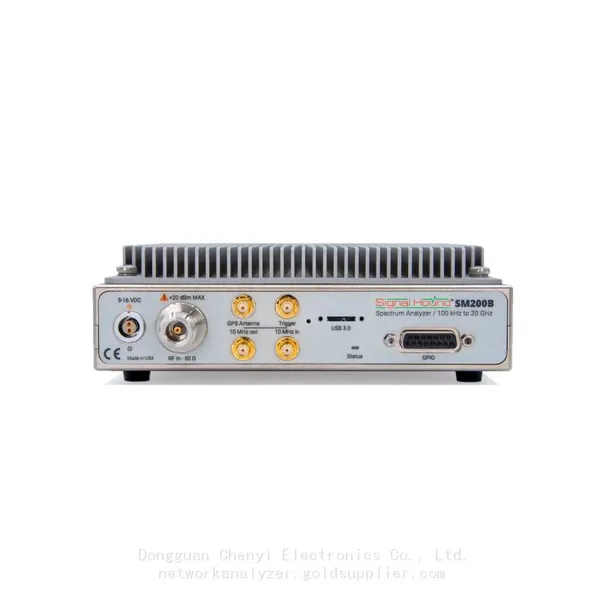
Signal Hound SM200B 100 KHz to 20 GHz Real-time Spectrum Analyzer Monitoring ReceiversNegotiableMOQ: 1 Unit
-
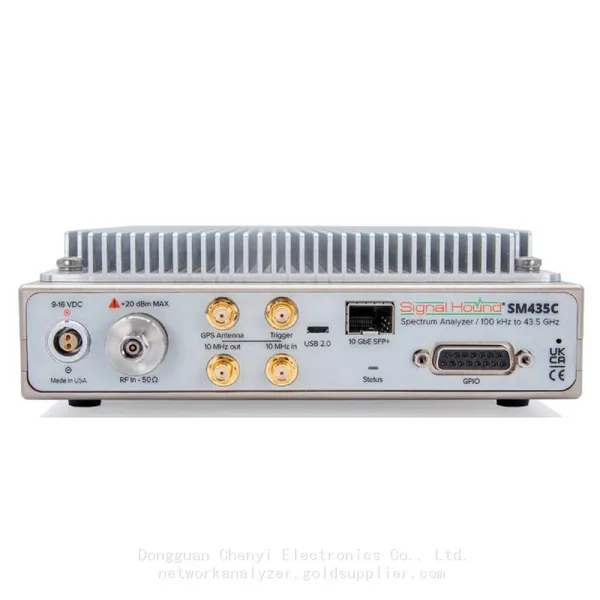
Signal Hound SM435C 100 KHz to 43.5GHz Real-time Spectrum Analyzer With 10GbE Monitoring ReceiversNegotiableMOQ: 1 Unit
-
Signal Hound SM435B 100 KHz to 43.5GHz Real-time Spectrum Analyzer Monitoring ReceiversNegotiableMOQ: 1 Unit
-
Signal Hound PN400 Phase Noise and VCO Test System 100 KHz to 43.5 GHzNegotiableMOQ: 1 Unit
-
Keysight E4980A Precision LCR Meter 20 Hz to 2 MHzNegotiableMOQ: 1 Unit
-
Keysight E4980B and E4980BL Precision LCR Meter 20 Hz to 2 MHzNegotiableMOQ: 1 Unit
-
Keysight U1733C Handheld LCR Meter 100Hz 120Hz 1kHz 10kHz 100kHzNegotiableMOQ: 1 Unit